Thai PM unveils major crackdown on 'Golden Triangle' drug supply chain
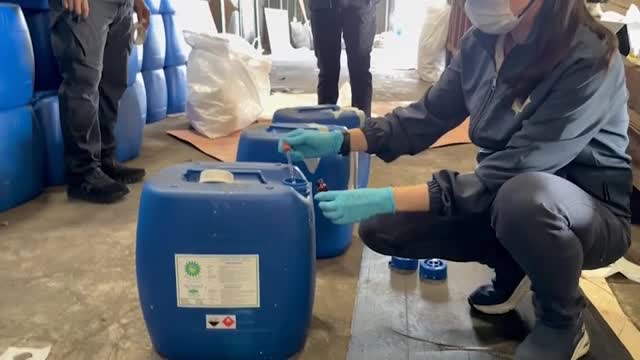
Thailand's Prime Minister unveiled a major crackdown that saw 50 tonnes of drug precursors seized from the 'Golden Triangle' drug supply chain.
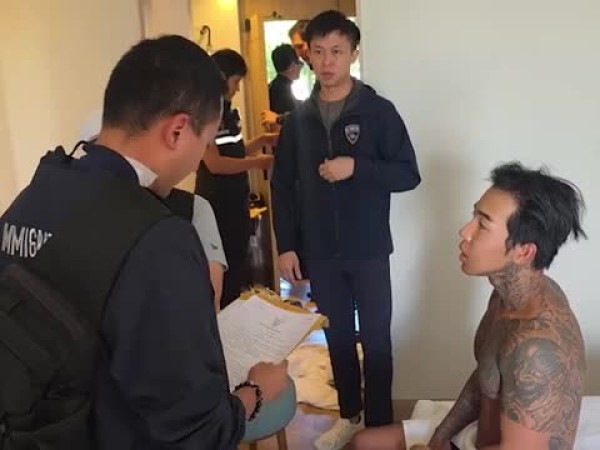
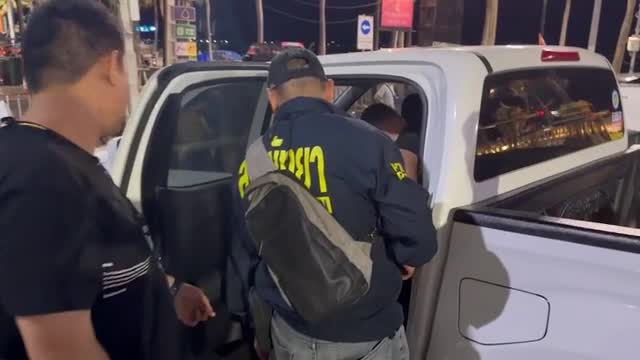
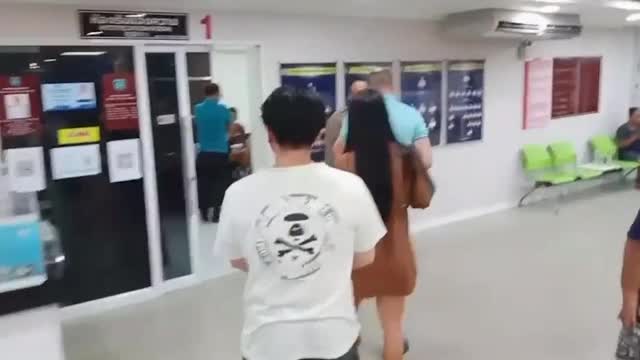
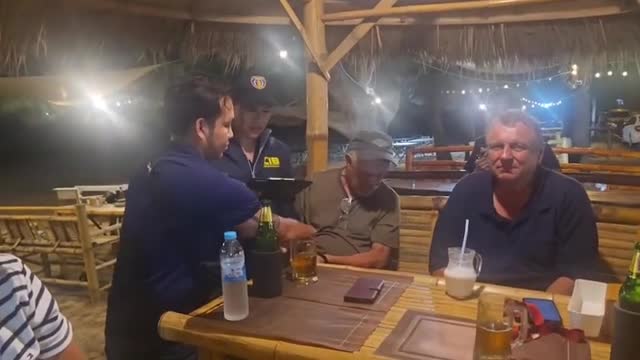
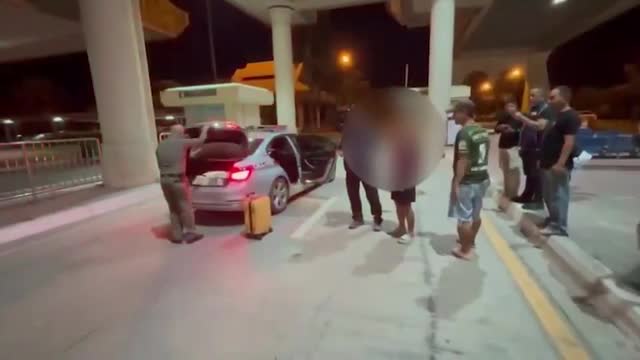
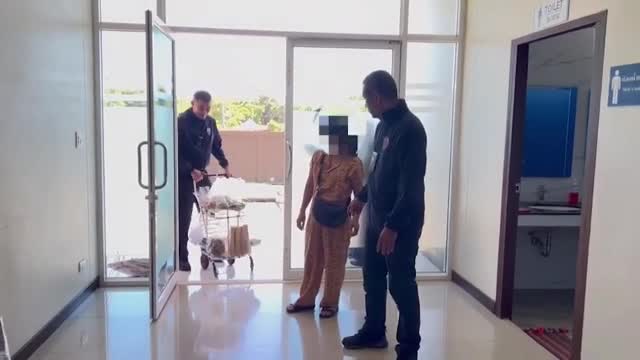
Prime Minister Anutin Charnvirakul on Tuesday said the staggering haul was discovered in coordinated raids targeting a network operated by 43-year-old alleged drug kingpin Thapanan ‘Noo Chen' Thamratthada.
The joint operation was launched with South Korea's National Intelligence Service after Noo Chen was extradited from South Korea in April.
He had fled Thailand around 14 years ago, and was allegedly involved in the illegal purchase, sale, and smuggling of precursor chemicals and substances destined for drug production facilities in the Golden Triangle region.
Speaking at a raided warehouse near Bangkok, the Prime Minister blasted the alleged smugglers, saying: 'This is a brazen crime that violates the law. They have no regard for the country and are targeting our young people.
'That is why we have a clear policy to crack down on these threats. It is essential to stop the smuggling of drugs and chemical precursors used to manufacture narcotics.'
Following Noo Chen's arrest, officials probed three companies operating across Bangkok and nearby provinces, and reportedly found links with Chinese 'grey businesses' in the country.
The groups had allegedly been smuggling chemicals used to manufacture etomidate - a powerful horse tranquiliser used in popular banned 'zombie vape' pods.
Officials said they confiscated a total of 20,073 pounds (9,105 kilogrammes) of acetone, 496 pounds (225 kilogrammes) of hydrochloric acid, 22,421 pounds (10,170 kilogrammes) of acetic acid, 9,920 pounds (4,500 kilogrammes) of sulphuric acid, and 57,320 pounds (26,000 kilogrammes) of dioctyl phthalate.
They said the 50 tonnes of seized chemicals could have been used to produce approximately 1.1 billion methamphetamine pills or 21 tonnes of crystal methamphetamine.
The Prime Minister praised the success of the crackdown and urged officials to maintain the pressure on drug traffickers.
He said: ‘What we are seeing now is the result of the government enforcing anti-drug trafficking and suppression policies strictly and seriously.
‘Cooperation has been requested from all sectors, including administrative officials, the military, police, and civilian agencies.
‘I believe all officials have recognised the government's determination, understand the dangers involved, and feel confident that the government will fully support their operations.
‘Every support initiative will be monitored and evaluated, and outstanding efforts will be recognised.'
Thailand's northern region sits on the edge of the notorious 'Golden Triangle' region, where its borders with neighbouring Myanmar and Laos meet.
The United Nations Office on Drugs and Crime (UNODC) said an explosive growth of illegal drug production in the area led to a record 236 tons of meth seized in East and Southeast Asia in 2024.
Benedikt Hofmann, UNODC Acting Regional Representative for Southeast Asia and the Pacific, said: 'The 236 tons represent only the amount seized; much more methamphetamine is actually reaching the market.'
At the heart of the Golden Triangle lies the Golden Triangle Special Economic Zone (GTSEZ), run by notorious Chinese business tycoon and suspected crime boss Zhao Wei in the Chinese vassal state Laos. Communist chiefs are said to turn a Nelsonian eye to his wrongdoing.
In 2007, Zhao brokered a deal with the Laos government and obtained a 99-year lease to build the zone on a 39-square mile patch of impoverished Bokeo province.
The Chinese businessman claims to be a benefactor as he touts the GTSEZ as a tourist and economic hub designed to bring more income and investments into the country. However, both local and international law enforcement agencies believe it is a front for organised crime, including human trafficking, drug trafficking, and call-centre scams.
International authorities have struggled to take down the gambling empire as the Laos government itself is said to be protecting the GTSEZ, in which it has a 20 per cent stake.